School Nurse Head Lice Checklist: A Practical Screening Guide
A step-by-step screening guide covering what to look for, how to document findings, private notification, and evidence-based exclusion decisions.
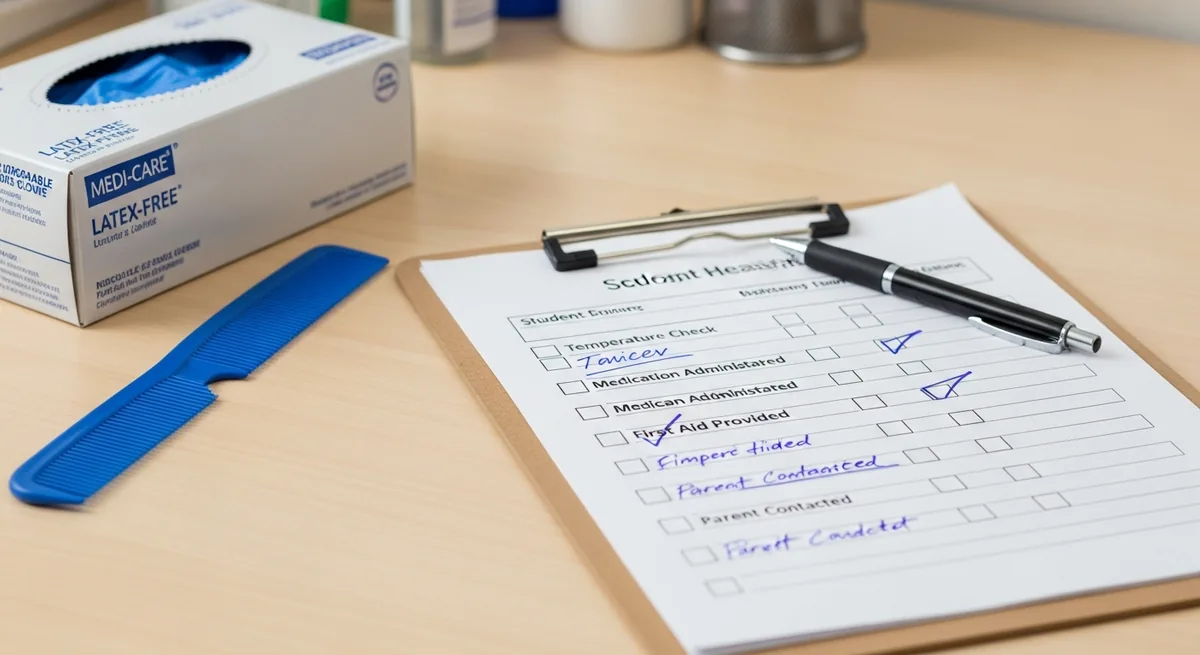
A school nurse head lice checklist is a consistent process for screening, documenting, and responding to suspected lice fairly and discreetly. The most reliable approach looks for live, crawling lice rather than nits alone, records findings privately, and notifies families one-on-one without naming children to others. Current guidance from the AAP and the National Association of School Nurses favors keeping children in class and avoiding routine mass screenings. Specific procedures vary by district, so always follow your own school's written policy.
Rules vary by district: Head lice policies differ from one school, daycare, district, and state to the next. This article explains common practices and current medical guidance — always confirm the specific written policy with your child's school or organization.
The Purpose of a Consistent Screening Process
Head lice are one of the most common reasons children visit a school health office, and how a nurse handles a suspected case shapes the entire family's experience. A consistent checklist removes guesswork, keeps decisions fair from one child to the next, and protects students from being singled out. It also gives informed parents a window into what good screening looks like.
The aim of screening is not to achieve a lice-free building — that is neither realistic nor necessary — but to identify genuine active cases, support families toward treatment, and keep children learning. Because lice spread mainly through prolonged head-to-head contact and are usually present for weeks before discovery, dramatic reactions rarely help. A steady, repeatable process does.
It is also worth noting what the evidence says about screening frequency. The AAP and the National Association of School Nurses do not recommend routine classroom-wide head checks, because mass screenings have limited proven benefit and consume significant nurse time. Targeted checks — prompted by symptoms or a parent's report — are generally more useful, though individual districts set their own expectations.
For parents reading this, the same principles apply at home. Knowing how a careful screening is done helps you check your own child confidently, interpret what the school tells you, and ask informed questions if a finding seems uncertain. A shared understanding between home and health office tends to make every case calmer and faster to resolve.
What to Look For During a Screening
Accurate screening starts with knowing the difference between a true active infestation and the many things that mimic it. The single most important indicator is the presence of live, crawling lice.
Live lice
Adult lice are roughly the size of a sesame seed, tan to grayish-brown, and move quickly away from light. Because they avoid exposure, you are more likely to spot them by parting hair in sections than by a quick glance.
Nits
Nits are tiny eggs cemented at an angle to individual hair shafts. Viable eggs sit close to the scalp; those found well down the shaft are usually dead or hatched. Unlike dandruff, a nit cannot be flicked or slid off easily — it is glued in place.
Common look-alikes
Dandruff, dried hair-product residue, scabs, and lint all get mistaken for lice. The key tests: dandruff brushes away freely, while nits resist; and only live lice confirm an active, contagious case. When in doubt, looking for movement matters more than counting specks.
How to Screen Step by Step
A calm, well-lit, private screening produces the most reliable result and the least anxiety for the child. The combing method below catches lice that a visual scan alone often misses.
- Screen in a private space with bright, direct light
- Explain to the child gently what you are doing and why
- Use a clean fine-tooth metal comb for each student
- Part hair into small sections, checking close to the scalp
- Focus behind the ears and at the nape of the neck
- Look for moving lice first, then note any nits and their distance from the scalp
- Clean or sanitize tools between children to avoid transfer
- Record findings discreetly rather than discussing them aloud
Documenting and Notifying Families Privately
Good documentation protects everyone. A brief, factual record — date, what was observed (live lice or nits and their location), and the action taken — helps track patterns, supports consistent decisions, and provides a reference if a family has questions later. Keep these notes confidential and stored according to your school's health-record practices.
Notification should always happen one-on-one. Contact the parent or guardian directly and privately, never in a way that lets classmates or other families learn who is affected. A short, warm message works best: state plainly what was found, reassure the family that lice are common and unrelated to hygiene, and offer clear next steps and a point of contact. The same care applies if a general class notice goes out — it should be worded so no individual can be identified.
The tone of that first conversation sets the family's whole response. Leading with reassurance rather than urgency lowers shame, increases cooperation, and makes parents more likely to treat promptly and stay in touch. Pointing them to reliable checking and treatment guidance turns worry into a manageable plan.
When Exclusion Is and Isn't Warranted
Deciding whether a child stays in class is where modern guidance differs most from older habits. The AAP and the National Association of School Nurses recommend that a child found with head lice be allowed to remain in school for the rest of the day and return after starting treatment — there is no need for immediate dismissal.
The reasoning is straightforward. Lice do not jump or fly; they pass through sustained head-to-head contact, which is uncommon in a typical classroom. Because an infestation is usually weeks old by the time it is noticed, sending a child home on the spot does little to prevent spread that has already occurred, while it does interrupt learning and invite stigma. Nits alone, especially those far from the scalp, are not a reason to exclude, since they are not contagious.
That said, exclusion rules are set locally, and some districts still require same-day dismissal or proof of treatment before return. A nurse's role is to apply the school's written policy consistently while advocating, where possible, for practices that keep healthy children in class. When the policy allows discretion, the evidence points toward minimal disruption.
A helpful way to frame the decision is to separate the medical question from the administrative one. Medically, a child with treated hair and no crawling lice poses essentially no risk to classmates. Administratively, the school may still have steps it wants completed, such as a confirmation from home. Communicating both pieces clearly — "there is no health reason your child can't be here, and here is the one form step we need" — keeps families from feeling punished while still honoring local procedure.
Handling the Trickier Screening Situations
Most screenings are straightforward, but a school nurse regularly meets cases that do not fit the textbook. Having a plan for these keeps decisions fair and reduces the chance of an avoidable mistake.
The uncertain finding
Sometimes you see something that could be a nit but might be residue, and no live lice appear. Rather than excluding on a maybe, the more defensible step is to comb several sections thoroughly looking for movement, note the uncertainty in your record, and, if doubt remains, ask the family to do a careful home check and report back. Acting on a guess erodes trust quickly.
The reluctant or upset child
Older students in particular may feel embarrassed or refuse a check. A calm, matter-of-fact script helps: "Lots of people get this, it is nothing to be ashamed of, and this will only take a couple of minutes." Screening in a private room, away from peers, and narrating each step before you do it lowers anxiety and improves cooperation.
The repeat visitor
When the same child returns several times in a season, resist any temptation to treat it as a behavior problem. Recurrence usually points to an incomplete treatment, a skipped follow-up application, or ongoing contact at home — not carelessness. The useful response is to gently walk the family through the full treatment and combing schedule and offer a checking routine, not to show frustration.
The language or access barrier
Some families need translated materials, a phone call instead of a note, or guidance toward affordable treatment options. Anticipating these needs turns your notification into genuine help rather than a dead end.
In every one of these situations, the same principles apply: look for live lice rather than eggs, document honestly, protect privacy, and lean on your district's written policy for the formal decisions. Treating each tricky case with the same steady fairness is what keeps the health office trusted.
Communicating With Families and Staff
Clear communication ties the whole process together. With families, follow up after the initial notification to answer questions, confirm that treatment has begun, and offer encouragement — many parents feel overwhelmed and appreciate a steady, judgment-free contact. Sharing a simple checking routine for the days ahead helps catch any newly hatched lice early.
With teachers and staff, keep messaging factual and privacy-protecting. Educators do not need to know which child was affected; they need to understand the school's policy, recognize that lice are common and low-risk, and avoid behavior that could embarrass a student. A brief, calm staff briefing prevents the rumors and over-reactions that make outbreaks feel bigger than they are.
Finally, build trust over time by being consistent. When families and staff see that the health office responds to every case the same fair, discreet, evidence-based way, they are more likely to report concerns early and cooperate fully — which is exactly what keeps lice manageable and children in class.
Consistency also means writing things down so the approach survives staff changes and busy weeks. A short internal reference — how you screen, what you document, how you notify, and what your district's policy says about exclusion — lets any substitute or new nurse follow the same fair routine. Because procedures and exclusion rules genuinely differ from one district to the next, that written summary should always point back to your own school's official policy as the final word, with this checklist serving as the practical, day-to-day companion.
How to Screen a Student for Head Lice
- 1
Prepare a private space
Set up in a quiet area with bright, direct light and a clean fine-tooth metal comb, and reassure the child before you begin.
- 2
Part the hair in sections
Divide the hair into small sections and examine close to the scalp, working systematically across the whole head.
- 3
Check the hot spots
Pay special attention behind the ears and at the nape of the neck, where lice and viable eggs are most often found.
- 4
Look for movement first
Search for live, crawling lice as the key sign of an active case, then note any nits and how far they sit from the scalp.
- 5
Document discreetly
Record the date, findings, and action taken in a confidential note rather than discussing results aloud.
- 6
Notify and clean up
Contact the family privately with reassurance and next steps, and sanitize the comb before screening another child.
Related Reading