When to Keep Your Child Home With Lice (and When Not To)
What current guidance says about lice and school attendance, plus the few situations where keeping your child home makes sense.
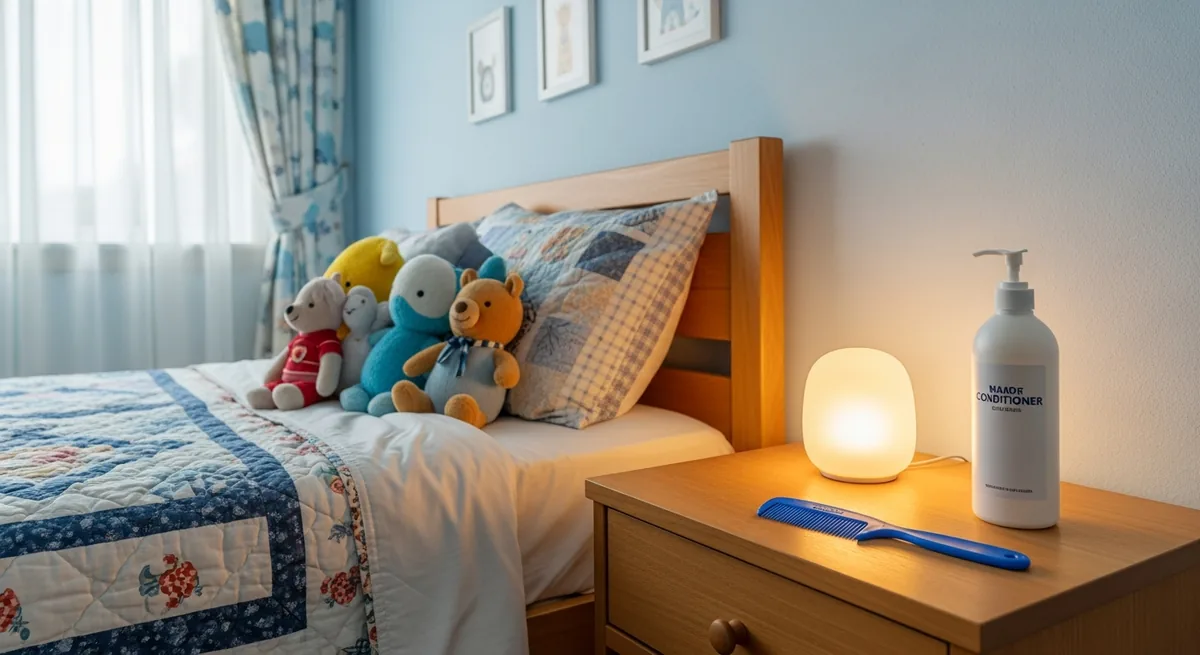
Under current American Academy of Pediatrics guidance, head lice are not a reason to keep a child home from school. Children can usually finish the day and return after their first treatment. Staying home only makes sense in a few situations, such as a strict school policy that requires it or a child who is too uncomfortable to focus. Because policies vary by district and school, always confirm your own building's rules.
Rules vary by district: Head lice policies differ from one school, daycare, district, and state to the next. This article explains common practices and current medical guidance — always confirm the specific written policy with your child's school or organization.
What Current Guidance Actually Says
If you have ever assumed a child with lice must stay home, you are far from alone — but the leading medical guidance now says otherwise. The American Academy of Pediatrics (AAP) and the National Association of School Nurses both advise that a child with head lice should not be sent home early or kept out of school. Their reasoning is straightforward and reassuring.
First, lice are not dangerous: they do not spread disease, and they are not a marker of poor hygiene. Second, by the time lice are discovered, a child has usually had them for weeks, so same-day exclusion does little to stop spread. Third, spread requires prolonged head-to-head contact, which is uncommon in most ordinary classroom activity. Taken together, these facts mean that pulling a child out of class mostly costs them learning time and risks embarrassment, without protecting other children in any meaningful way.
The bottom line
The modern, evidence-based default is simple: a child with lice can stay at school, go home at the normal time, begin treatment that evening, and return to class — often the very next day.
This shift in thinking reflects a broader change in how schools weigh costs and benefits. Excluding a child from class is not free: it means lost instruction, scrambling for childcare, and, often, a lasting sense of shame that can follow a child socially. When weighed against the very small chance that one more day in class meaningfully spreads lice, the math favors keeping children learning. That is precisely why the major guidelines landed where they did, and why more districts revise their policies each year to match.
When Staying Home Does Make Sense
Saying that lice alone are not a reason to miss school does not mean staying home is never appropriate. There are a handful of situations where keeping your child home for a short time is reasonable or even required. The key is to base the decision on the specific circumstance, not on stigma or panic.
The most common reason is simply that your school's written policy requires it. Some districts have not yet updated their rules, and a same-day exclusion or treatment-before-return requirement may apply. In that case, following the policy is the path of least friction while you advocate for change separately if you wish.
A second sensible reason is your child's own comfort. A heavy infestation can leave the scalp itchy and irritated, and a child who is constantly scratching and distracted may genuinely struggle to learn that day. There is no harm in a single quiet evening or morning at home to complete a thorough first treatment and combing session before sending them back refreshed. Likewise, a child who is acutely embarrassed or anxious may benefit from a brief pause and a reassuring conversation. These are judgment calls based on how your child actually feels — not blanket rules, and not reasons for an extended absence.
- Your school's written policy still requires exclusion or treatment before return
- Your child is genuinely too uncomfortable or distracted to focus in class
- You need a single evening or morning to complete the first treatment properly
- A heavy infestation has caused scalp irritation that needs attention
- Your child is extremely anxious and a brief pause would help them cope
- A doctor has specifically advised a short stay home for a related issue
Why Policies Vary So Much
One of the most confusing parts of this topic is that two families in different towns — or even different schools in the same district — can have completely different experiences. That is because there is no single national rule on lice and school attendance. Individual states, districts, and schools set their own policies, guided but not bound by medical organizations.
Some schools have fully embraced the AAP position and let children remain in class with no fuss. Others still maintain stricter rules, including older "no-nit" policies that require every egg to be removed before return. If your school has a no-nit rule, our no-nit policy explainer covers why these are increasingly discouraged. To understand the full range of what schools may require, the school lice policy guide walks through notification, exclusion, and return rules in plain language. Because this variation is real, the safest move is always to confirm your own school's current written policy rather than assume.
The variation does not stop at school doors, either. Daycares, summer camps, sports teams, and after-school programs each set their own approaches, and they are sometimes stricter than the local school because they serve younger children or operate in shared sleeping quarters. If your child moves between several of these settings, it is worth knowing each one's expectations rather than assuming the school's policy applies everywhere. A quick question to the program director clears up most uncertainty in a single conversation.
Advocating for updated rules
If you find your school's policy out of step with current guidance, you can raise it constructively. School nurses are often already aware of the AAP position and may welcome parent support for change. Frame your request around keeping children in class and reducing stigma, and point to the published recommendations rather than personal frustration. Change tends to come gradually, but many districts have modernized their rules precisely because parents and nurses pushed together for a calmer, evidence-based approach.
Return Timing After the First Treatment
If your school does ask for treatment before return, the good news is that the timeline is short. Most evidence-based treatments work after a single application, with a second application about a week later to catch any newly hatched lice. Crucially, your child does not need to be completely nit-free to return under modern guidance — they simply need to have started treatment and be free of live, crawling lice.
In practice, that means a child found to have lice can usually be treated in the evening and go back to school the next morning. Old advice to keep children home for days while every nit is combed out is outdated and unnecessary, since nits found far from the scalp are typically dead or already hatched. For the full treatment sequence and proven options, see our head lice treatment guide, and to confirm the diagnosis first, our how to check for lice guide shows the comb-and-light method.
Don't forget the follow-up
Returning to school quickly does not mean the job is finished at home. Nearly all treatments need a second application about seven to nine days later to kill lice that hatched from eggs the first round missed. Mark that follow-up date on the calendar the moment you treat, because skipping it is the single most common reason lice seem to come back. Between the two treatments, comb through the hair every few days to remove stragglers. Your child can attend school normally throughout this window — the follow-up is simply ongoing home care, not a reason to miss class.
What to Tell the School
Communicating with the school should be brief, honest, and low-drama. You do not owe anyone an apology — lice are common and not your fault. A short note or call to the nurse stating that you have found lice and begun treatment is usually all that is needed, and it lets the school follow its own process while protecting your child's privacy.
Ask two practical questions: what, if anything, the school requires for your child to return, and whether they prefer any particular form of confirmation. Keep the tone collaborative. If you want help wording your message, our guide on notifying schools about head lice offers a calm script. And if you are unsure when classmates or your own child are clear to be back, our overview of when kids can return to school lays out the timing simply. Remember that the exact expectations differ by school, so let the nurse's answers guide your specifics.
You are also under no obligation to broadcast the news beyond the people who need it. There is no requirement to tell other parents, and the school will not share your child's name. If a close friend's family was in prolonged head-to-head contact, a quiet, kind heads-up is a generous courtesy so they can check too — but that is your choice, framed as helpfulness rather than confession. Modeling this matter-of-fact attitude teaches your child that lice are simply a small bump in the road, handled and moved past, not a secret to carry with shame.
A Simple Decision Process: Stay Home or Go to School?
- 1
Confirm it is really lice
Do a wet-comb head check under bright light to verify live lice before making any decision.
- 2
Check your school's policy
Read your school's written lice policy or ask the nurse whether exclusion or treatment before return is required.
- 3
Assess your child's comfort
Decide whether your child feels well enough and calm enough to focus in class, which is usually the case.
- 4
Start treatment promptly
If you find live lice, begin an evidence-based treatment that evening so your child can return quickly.
- 5
Communicate and return
Tell the nurse you have begun treatment, confirm return requirements, and send your child back per the policy.
Related Reading